Once a piece is stable and identified, attention turns to its surface. The guiding idea is restraint: clean only as much as needed, repair with methods that can be undone, and protect the aged surface that gives old furniture its appeal. Patina, the soft depth that decades of light and handling build up, is part of a piece's value and is easy to scrub away by mistake.
Cleaning from gentle to stronger
Cleaning works best as a ladder, starting with the mildest option and stopping as soon as the surface is acceptable.
- Dust with a soft, dry cloth or a soft brush to lift loose grime first.
- Wipe lightly with a barely damp cloth, drying immediately, for general soil.
- Use a mild conservation-grade cleaner only where a damp cloth is not enough, after testing in a hidden spot.
Water sitting on an old finish can blanch or lift it, so cloths are kept barely damp and surfaces are dried at once. Strong household cleaners and silicone-based sprays are avoided because they can interfere with any later finishing.
A darkened, mellow surface is usually desirable and not dirt to be removed. When cleaning starts to lighten the colour rather than lift grime, that is the signal to stop.
Scratches, dents, and rings
Shallow scratches in the finish can often be improved without refinishing. Reviving the finish or filling with a compatible wax can reduce their visibility. Dents in solid wood sometimes respond to careful steam, which swells the crushed fibres back toward their original level; veneer is far more delicate and is treated with caution.
Lifting veneer and weak joints
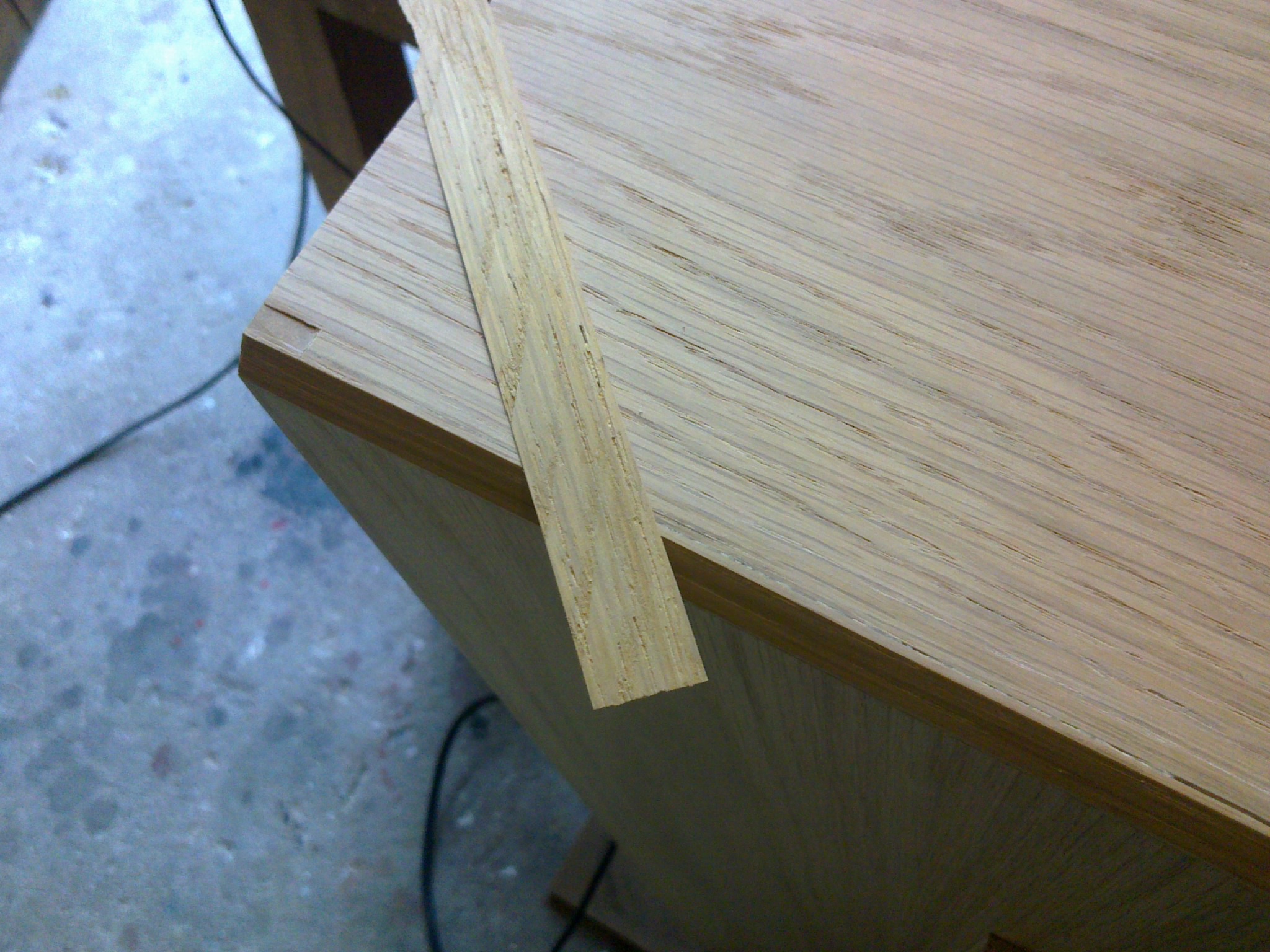
Lifting veneer is among the most common repairs. Where the original glue has failed, a reversible adhesive such as a traditional hide glue is often preferred because it can be released later with moisture and heat, keeping the repair undoable. The veneer is worked flat, glued, and clamped with a caul to spread pressure evenly.
Loose joints are re-glued rather than simply nailed. Old glue is cleaned from the surfaces so the new adhesive can bond, and the joint is clamped square while it sets.
Working in Canadian conditions
Gluing and clamping are affected by temperature and humidity. Very dry winter air can make some glues set faster and can shrink parts as they cure, so a stable, moderate workshop environment gives more predictable results. Allowing repairs to acclimatise before final finishing reduces the chance of movement later.
Conservative cleaning and care notes for wooden objects are published by the Canadian Conservation Institute and the Smithsonian Museum Conservation Institute. Professional conservators in Canada are listed through the Canadian Association for Conservation.